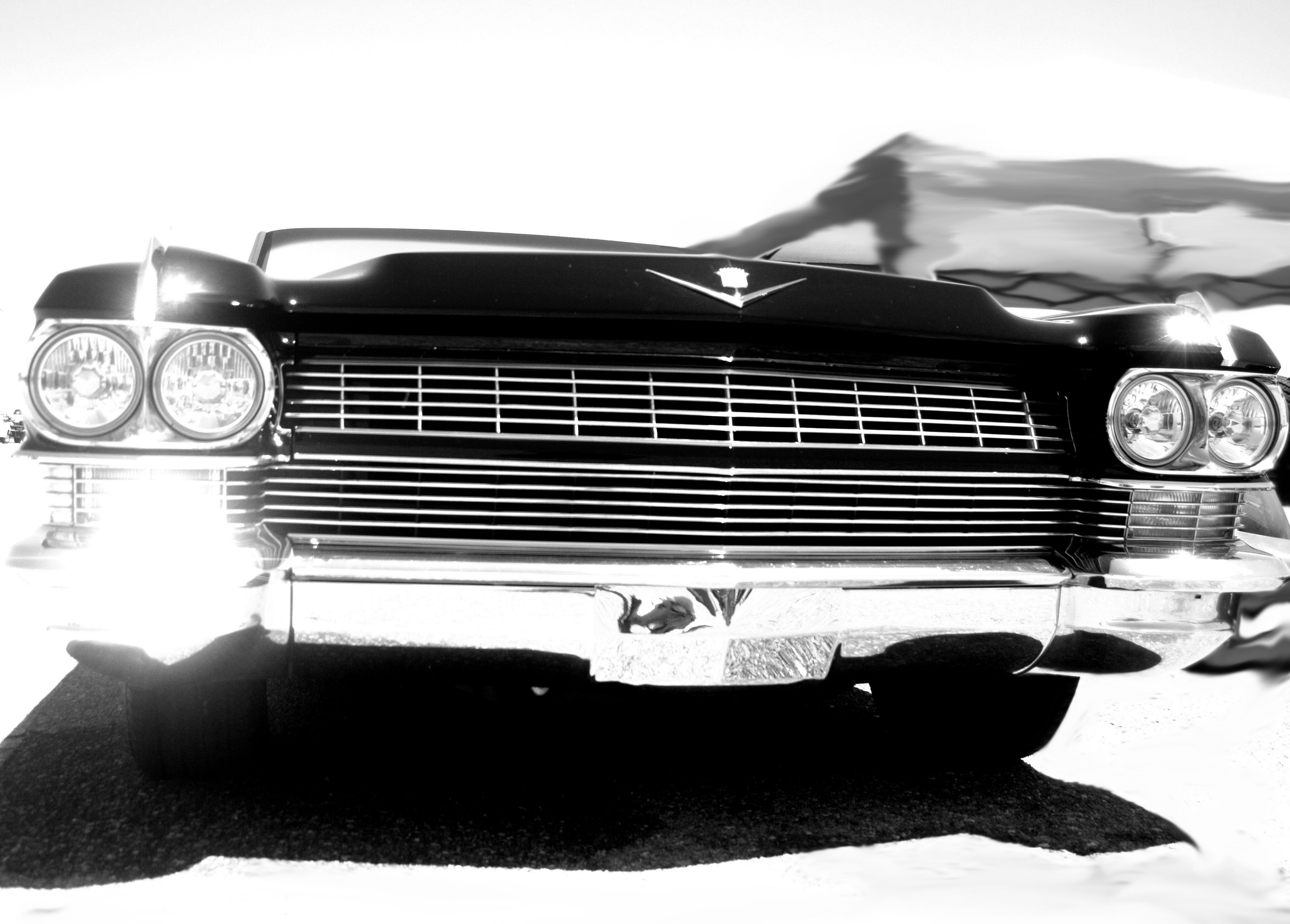
Thanks for all the comments and emails on the Part 1 of the Cars You Never Heard Of.
Thought I’d follow it up with the Panther Kallista. This stems from the same article in “Classic and Sport Car” a UK publication. The article pitted pricey European cars against less expensive cars and rated them. It’s over all theme was “See you can get this close to the expensive cars, for less.”
1985 Panther Kallista
Kallista was the product of the Panther Car Company and they were built between 1980 and 1990, actually coming on the market in about 1982. The were a box chassis with an aluminum body. The engine that was first used was Fords 2.8 V6 which cranked out 2792 cc from its 12v configuration. The electronic fuel injection helped it deliver 150 hp and 159 lb ft of torque. Top speed was about 120 mph with the help of the 5 speed manual transmission.
In the article Kallista was compared against the Morgan Plus 8 which you can purchase now days for about 35,000 British Pounds (about $70k US) compared to the collectors price of 7,000 BP ($14k US). In that contest comparing Driving, Practicality, Character, Value and Usability the Morgan was judged with a total of 37 points and the Panther Kallista end up with 35.
I did find one on Ebay with a few days still to go with a current bid of just over $4k. It’s an 1986, 4 cylinder – not a V6.
Of course I spend a lot of time reading and again a lot of that is two or three-dimensional, although my wife says it’s a single dimension. She sees just “CARS” I see muscle cars, sedans (that I want to turn in to muscle cars), exotic cars and even some European cars. That’s multi-dimensional, don’t you think? I gained a little interest in them when I was a kid and my Dad surprised my Mother with a 60’ish MGB – mainly I learned that unless you wanted to fix ’em a lot…stay a way!!!
I gained a little more familiarization with another brand when I was in college. I had my license suspended….you can figure out why…so don’t make me say ‘too many speeding tickets”, ok? Thanks. So it was only about a mile or so walk to the campus from where I stayed, but if you are from one of the colder States, like northern New York, then you’d know that a morning jaunt on a Dec. morning is ‘nippy” to say the least. So I would catch a ride with a friend. He drove the one of the coolest cars I had ridden. It was a Citroen. Similar to this one:
It had the coolest suspension that would raise when you started it and lower when you turned it off.
My point being that there is another dimension to my reading – European cars. But I am in no way any kind of expert with any of them – although when I lived in Germany, I drove a very old European Ford Escort. That car was horrible!!!! However, it got me round, even when the upper part of the seat frame broke and the only way to drive it was by holding yourself forward using the steering wheel else the seat back, because it leaned so much, should dump you in the back seat. Last year I signed up for..please kneel…”HEMMINGS”… thank you….you may relax now… SPORTS & EXOTIC CAR magazine – some great articles and I enjoy Mike’s and Richard’s writings. Geezze, this is a long way around to the point that I picked up a copy of Classic & Sports Car magazine – UK produced – the other day.
In this was a series of articles that pitted 4 pair of cars against each other. One car in each pair was an expensive classic brand/model and the other was relatively inexpensive newer brand/model. Two things dawned on me, one was,”Hey, I’ve never heard of a Reliant Scimitar SS1 or a Panther Kallista.” The second thing was, “Hey, have never heard of any of these cars!” Normally if I have just one of these realizations – I won’t read the article… nope not interested…. but this time I did.
And now I need to know a little about these cars and I know you do to….all three of my readers!!! So we’ll take a look at the Panther Kallista and the Caterham Seven and the TVR S3 and the Reliant Scimitar SS1.
First up is the Reliant Scimitar SS1.
This car (at about 3000 British Pounds – $6000 USD) was being compared to the Lotus Elan (at 16000 British Pounds or about $32,000 USD). Here is what it looks like:
Reliant Scimitar SS1
Not bad-looking!!!!
These cars were made from 1986 to 1990, however the Scimitar actually arrived on the scene in 1964 with a Ford straight 6 cylinder as the power plant. These more recent models had a spaceframe chassis and fiberglass body, an iron block, alloy heads, SOHC 1809 cc, 8 valve 4. It also sported a Garrett T2 Turbo with electronic multi-port fuel injection system. This allowed it to lay out 140 HP and 141 lb ft of torque and reach a top speed of 128 mph and it only weighted 1969 lbs.
They sported a 5 speed manual transmission, rack and pinion steering, double wishbone independent suspension and disks breaks.
Just to give you some closure, it was compared to the Lotus Elan where it scored 2 points less than the Lotus (38 to 40) in Driving, Practicality, Character, Value and Usability.
Any one out there have one of these? Know anyone that has one? If so drop a comment and pic.
When you work with and/or drive classic cars there is a never ending battle between old school and technology. Do I leave the points and condenser in or do I go all electronic? Do I update the suspension with coil-overs or go with stock suspension? Upgrade the interior to cloth or go with the vinyl? Many of us face those battles all the time. But there’s one clash between old and new that we just can’t to anything about and that is when new non-car technology clashes with old cars.
Back in ancient times the man went out to gather or kill something to bring home for dinner. That hasn’t changed much, especially in my household. Every week I strike out into the jungle to visit the local gatherers’ spot and cart home something for dinner. The only killing going on is my checking account balance.
Today was the day for our weekly shopping, so I fired up the ’70 Stang and headed out, ready for the hunt. After I was done scouting for “sales” and had enough provisions to last seven moons, the clerk (oh, they don’t call them that anymore…’associate’ is the correct term) took my hard earned provisions(HEY!!!..its tough shopping at the mega grocery – carts speeding around like herds of prehistoric lizards, tar pits of jelly on the floor, ill tempered rival tribes in the gourmet isle…yeah…it’s tough!!), stuffed them in to about 20 plastic bags and dumped it all into a cart. On the way out of the store a couple of clerks….excuse me…associates…said have a ‘nice day’ and ‘thank you’, as I tried to push the squared wheeled cart to the parking lot and my car.
As I popped open the trunk on the Mustang, I remembered the floor of this cavernous opening is covered with the new vinyl (original material) I installed a few months back and nothing else (I don’t carry a spare for drag strip purposes and it wouldn’t work with the tire size anyway). I looked at the contents of the squared wheeled cart and realized that by the time I got home, my gatherings will be all over the place, even if I didn’t drive like I normally do. If I tied them shut, the bags are still going slide everywhere, including into the quarter panel wells, creating a dripping plastic bag full of wine that just moments ago were grapes.
My next option was putting the bags inside, on the vinyl bench seat in the rear and the on front bucket set. Still the vinyl was going to let everything slide side to side and drop down on the floor.
Then I remembered back to when I shopped with my mother as a kid and the vinyl seats in our old Chevy Biscayne. The saving grace there were the old school paper bags that stood up straight and were packed heavy to stay in place. Their square shape allowed for the use of effective load master techniques that kept them on the seat or upright in the trunk. Then I thought,”I should have gone with the cloth over the vinyl.”
I like off –beat cars. By that I mean, the ones nobody thinks about immediately. Some of those are cars like, Studebakers, Edsels, and Mercurys.
A few years ago, actually shortly after we moved to Tucson, AZ., I was at the local Safeway and I saw this black car moving through the
parking lot. I was on foot and I hurried to the end of the parking row to see if I could catch the manufacturer and
model. To my surprise that sports-roof-like, long black car was a Mercury Marauder!! It was beautiful. I’m still not sure what
year it was but I believe it was a 1969 and possibly an X-100, but I can’t be sure.
'69 Marauder
I’m not totally unfamiliar with Mercury’s, having lived with grandparents who for years would only buy
that Ford brand – mainly the Marques and other 4 door models. Frankly back then I wasn’t all that impressed.
But the Marauder, like the Cougar, wasn’t your grandparent’s car!
So coming up is my write-up on the Mercury Marauder.
I thought I’d take a minute finish up the write-up on the very first upholstery job. I finished it up a two weeks ago and really missed driving the Mustang, but that’s what happens when you do your own work and you can only fit it between all the normal life stuff that needs to get done.
Yes, as I was reminded twice by a couple of car acquaintances, I used a kit, some say they aren’t much different from slip covers, but as you can see in my shots here that’s a bit of an understatement.
Now these next two videos are not all that great but I think you can see the removal of the back and the fasteners. I’ve worked with these type of fasteners before in my father’s body shop (back in the early ’70s) nearly all door panels and seat back were fastened in that way. They work really well but bend them (and they do bend easy of they aren’t aligned with the hole and pressure is applied) and you’ll have to spend sometime reshaping them, even then they might not hold properly, or replace them.
Check out the videos:
Here are a few more photos and the finished product. Not to bad for my first one. I have the passenger’s side to do.
With the plastic seatback removed.
Needed to remove the back release
2 piece
release removed.
Helpful hint: All the hardware and fasteners have to pass through upholstery. Rather than try to cut holes, I made X cuts and pressed the screw or hardware through. This made it as tight as possible.
Markings on the Foam
Good shot of the cloth sleeve with the wire passed through.
Here you would pass the hog wire while in the hog-nose pliers through the cloth between the upholstery and the wire. You then have to shove this down between the two pieces of foam and grab a spring.
Finished product.
Replacing the seat track was done before I married the bottom and back. Placing it back in the car was a little tricky..until I figured out that moving the set on the track was the way to get the studs to drop back in to holes in the floor board.
Over all this was not as tough as I thought it would be. The passenger side will be quicker. I’ll post the final product on that side.
I was recently talking to a coworker of mine who own a 1949 Pontiac Silver Streak Delivery Van (link – http://wp.me/pKHNM-Bx ) and we were discussing his 6 volt system and the troubles with low amperage.
Well I just ran across a couple of interesting articles dealing with that subject. Now I will tell you I am not “the guy” for electrical work – nope not me (I had a bad experience – ok – a couple of bad ones). But even this one I can understand.
Increasing the power supply often means that you need to convert to 12 volt and maybe 15 years ago yes, but now 6 volts are readily available. So here is what you do (sorry no pics)
Take two 6 volt batters and link them in parallel by connecting the two negative terminals to each other and the two positive to each other. The main positive cable goes from the positive terminal of the first battery to ground and the main negative cable is connected to the negative terminal of the second battery. Of course in some case you may have to modify the batter shelf, but it will sure help kick up the cold cranking amps.
Folks seem to like this segment so let’s continue with 1950.
19 major car makers existed back then and Chevy topped the production totals with 1,498,590 units followed closely by Ford with 1, 208,912. The rest of the field were all less than have that.