Vacuum – Tune it up!

Checking the vacuum on your old car is an important part of a thorough, but most of the average guys don’t bother, or don’t have the gauge.  Most often if you do have the gauge, you might not be exactly sure what the reading might be.  For the recorded I’ve never had a car where the readings were stable.  Normally you’ll get a fluctuating reading that move around.  Below are a few ‘ranges’ and what they may indicate.

Standard Vacuum Gauge

These are for V8’s only:

–  A good reading will be between 15 and 22 in. hg (a steady needle).  Closing the throttle you should see a 5 notch drop and reopening it should settle back previous span (15-20).

– If you get a reading where the needle has a swing 4-5 in. hg ethier side of normal, you are looking at a possible simple carb adjustment.

–  If the reading is higher than normal you need look at replacing your air filter or check to ensure your choke is not stuck.

–  Low reading would be fairly steady reading around 5 hg will have you looking for a vacuum leak on the intake/carb area.  Look for poor connections at the carb or any “T” or “Y” or straight though connection.  Baring that look for cracked hose.  You know I hate vacuum leaks.  I recently restored a 1984 corvette with the Crossfire injection set up.  Rather than chase down a single spot, I just replaced them all.  That was a lot of vacuum hose and tucked in some stuff spots.  But you are working on something bit older, like my 1970 Mustang, replace it all, it’s going to go back sooner or later, especially with the kind of temps we have out here in the Southwest.

–  If you get a reading that between 8 and 14 you are looking at a timing issue at the least to leaking piston rings at the worse.  Do a compression check for the leak and use your timing light before you tear it apart.

–  If the needle is swinging (unsteady) between 14 and 19 hg that indicates valve guide problems.  That going to be a valve guide problem.

Thanks for reading

Tim


Auto Factoids for Week of Oct 9 2011

O.K.  These are back, enjoy.


10/12/1950  Kaiser-Frazer Built their 500, oooth car.

There ya go...the 500, 000 th


On 10/13/ in 1902 Packard Motor Car Co. was formed from the Ohio Automobile Co.  Of interest: In September, 1900, the Ohio Automobile Company was founded as the manufacturer, while the cars were always sold as Packards. Since these automobiles quickly gained an excellent reputation, and there were more automobile makers that produced — or at least planned to — under the label “Ohio”, the name was changed soon: On October 13, 1902, it became the Packard Motor Car Company.


1902 Packard Model F


An Ohio


The very next day 63 years later Oldsmobile debuts the Toronado (10/14/1965).

1965 Toronado I want one of these


On 10/15/1945 Oldsmobile began creating producing per war cars.

And  1924 on the 15th of October, one of my hero’s was born.  The proud Poppa  of the Mustang and savior of Chrysler Lee Iococca was born in Allentown, PA.


Thanks for reading.

Tim


Car Production Numbers. They Made How Many? 1901

This is it. The beginning of it all.     What were they making in 1901?

The top producer was the Locomobile car company with a total out put for the year 1,500 cars.

Winton was second with 700 cars.

Oldsmobile (ahh one we’ve heard of!!) was third with 425.

White came in fourth with 193.

Autocar was next with 140.

Knox was sixth with 100.

Rounding out the bottom was Packard and Stanley with 81 and 80 respectively.


This is a 1901 Winton Racer..what's the guy in the front doing?


1901 Autocar


The 1901 Autocar has a shaft-drive engine, powered with a water-cooled, two-cylinder, horizontal-opposed engine in the front of the car. The gasoline tank and battery box were under the front seat.

Thanks  reading,

Tim

A Velie!

These images were post on

http://forums.aaca.org/

A great site.  Of a 1925 Velie for sale  asking $14,800.  See below:

1925 Velie

Radiator emblem

Thanks for share.

Tim

Automakers World War II Efforts-American Bantam

I love auto history, and one of the areas I enjoy learning about is what car companies made to help support war efforts.  So this series will be a small snapshot of the vehicles and some surprising other items.  As a note, most of the makers didn’t just volunteer to stop producing cars, although most complied with the restrictions on materials – like not using chrome for the brightwork, which created the very collectible attribute for wartime cars – the blacked-out version.

First up, American Bantam.  “Who?” you might be saying.  Ok fine.   Do these ring a bell:

1938 American Bantam

1939 American Bantam Roadster


Nice looking cars, not much on name recognition.

The company started out as the American Austin Car company  In 1930 and in 1934 became associated with the British Austin Car Company and then filed for bankruptcy.  In 1935 it was revived as the American Bantam Car Company.  They are credited with the first jeep prototype.  (So any guesses as two one of their contributions during WWII?).  The company stopped doing business in 1941.

Reach search show 3 main contributions for the American Bantam Company.

First up and one of the most important  military vehicles.

1940 Bantam Jeep

Nothing but functional with a 4 cylinder engine.

1940 Bantam Engine – 4 banger Flat head.


As if that wasn’t enough the also produced two trailers for pulling behind the jeep.

1939 Bantam Pumper Trailer for use with the Jeep.

Impressive.

amphibious Trailer

And there you have it.  American Bantam’s extremely important contributions to the World War II effort and tahe beginnings of one of the most versatile military vehicles…the Jeep!!

Thanks for reading.

Tim

1965 Chevelle – A rare one

Chevy and it’s customer loved the Chevelle, the customers because of the low price and horse power, Chevy because of the sales. Now days a Chevelle is a highly sought after collector car.  Finding a real good one is rare unless you want to play nearly a years salary.

Among those are clusters of the extremely rare.  Within the production of the 1965 Chevelle there is an extremely rare version. That was the year Chevy took its brand new Mark IV 396 engine and hoisted it to the engine bay.  It was the first of its kind (but not the last – the following year the 396 Chevelle became a regular model) with 375 hp and a 4 speed transmission.  This was the special SS model of the Chevelle.

This was Code Z16 and only 201 1965’s were made with engine/transmission and trim, making this one of the rarest of the Chevelles SS.

1965 Chevelle SS Z16

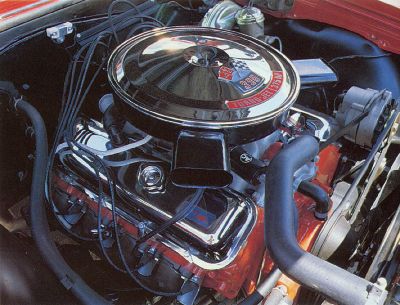
The 396:

The 396 engine


I love this combo.

Thanks for reading.

Tim


Mustang Upholstery Front Seat Finale

So what I’ve I been doing lately car-wise?

Finishing up the front seats of Mustang and putting them back in the car.  Yes, I know I should have gotten all the new carpet and the heat and sound deadening but  I didn’t.  They are easy enough to remove so not really a big deal.  I did notice while the seats were out just how thin the carpeting actually was, there is nothing between it and the floor pans, I’ve got to get those done…soon…soon.

Here’s some shots of the final production.

Drivers seat


Passenger's Seat. This is the one I just finished.


Tim

Car Production Numbers. They Made How Many? 1922

It is 1922 and the car industry is moving right along.  Small start-up car companies pop up here and there in the 1920’s.

Here is how they stacked up for 1922.

Top spot was Ford  producing 1,147,028 cars.

Dodge was a very distant second with 152,653 car rolling off their assembly line.

Chevrolet ran in third place with 138,932 cars made.

And finish up the list were Buick with 123,152; Studebaker with 105,005; Williys-Overland with 95,410; Durant with 55,300 and finally Maxwell/Chalmers 44,811.

Total passenger cars produced were 2,274,185 with 269,991 truck being made.

Rickenbacker was a new upstart beginning production in 1922.

Durant produce a car priced at $319 . Ford reduced prices to $298.

Balloon tires were introduced.

Hey fuel gauges began being installed in dash in 1922.

1922 Durant Star - An attempt to undercut Ford's prices

1922 Rickenbacker 4 Door

I love this one:

1922 Chrysler Panel Truck

Thanks for reading.

Tim

2015 Mustang – No V8?!!!

I was just reading about the 2015 Mustang (yeah..they are planning it now) in the Oct 2011 Motor Trend.

It’s going to look great with a lower angled windshield and it will be lighter, but it will begin to lose it’s muscle car images, at least
underneath.

From the Motor Trend web site. 2-15 Mustang

The live axle will be gone, replaced with an independent rear suspension.  Not really what you want to take to the track.  There was talk that the live axle might live on in factory drag packs, but the tooling would be expensive and perhaps not cost-effective.   We’ll see what actually happens.

Ford Live Axel

Independent Suspension.

But this is not focus of this blog entry.  What I really want to mention was a side bar in the article.  It is entitled “Icons on An Icon”  “What should the next Mustang be?”  Those interviewed were Jack Tenack who was a designer for Ford and global design vice president ( He actually drew the first proposal for the 1965 Mustang); Chris Theodore who was chief of Ford Motor Company’s North American product development  (he left after a disagreement over the
suspension for the 2005 Mustang with Phil Martens); Tom Gale who had nothing to do with Ford at all, he was Chrysler design chief (now retired).

Generally Mr. Tenack stayed true to form, basically wanting small changes to the next issue of the Mustang, reinforcing the muscle car
image.  He thinks all-wheel drive should be added as an option…that’s not horrible.

Mr.Theodore wants the new Mustang to have a 4 cyclinder…WHAT???  Yeah, get this, he’s like the V8 engines reserved for ‘specialty models”…can you say  …hiss…boo???  “Hey, the 70’s called they want their paradigm back!!” Of course he led the charge to replace the live axle.

Mr. Gale thinks that we need to copy Europe and thinks the Mustang needs to be smaller.  He says the Camaro is more similar to is predecessor then the Mustang is to its predecessor.

Drop me your thoughts.  No V8?   Live axle?  Smaller ‘Stang?

Thanks for reading.

Tim

AMC Grembin and Pacer New and Now Value

One of the things I enjoy checking out is increase in the value of some of our US classic cars.

I recently ran across this  breakdown in Hagerty Insurance magazine…it normally has some good articles.  This one was about American Motors and it had a section on original cost of the cars and the current collector’s value.  So check this out:

1967 Marlin – a cool looking car if you ask me – had a base prices of $2,963.  Today that car will cost you about  $23,100.

A good looking car in Two Tone paint.

1969 Javelin SST – love these cars  – I once dated this girl who drove one and..oh…um..nevermind – back in the day they cost  $3,144 and today average cost is $33,900.

69 Javelin SST

1970 AMX 390/325 – I know I’m suppose to love these cars – they being, perhaps the sporty-est of the AMC brand, but I don’t – they would run you $3,798 back then and now you can pick one up for a mere $55K!

1970 AMX

1972 Javelin SST – see my comment for the ’69 – base price in 1972 was $3,807 and today $22,400.

1973 Gremlin X Coupe – ok  I really don’t care at all about these, except when I see them at the drag strip with a huge GM block stuffed between the fenders – they would set you back $2,098 back in ’72 and today you can get one have it mounted on a pole in the front yard for $11,700 (pole not included and labor extra and you’ll have to sign a waiver).

1973 Grebmlin X Coupe (Seen here without the pole)


1976 Pacer DL Coupe – well.. if wasn’t a DL coupe….ok even though it is…insert comment for Gremlin above – except for $15,000 you can pick one up today, remove the body from the frame, bury it upside down in backyard and with a little tweaking you can have a really cool hot tub.

1976 Pacer DL Coupe…just before it was turned into a hot tub!

OK..that was mean..here ya go:

’76 Pacer DL Sport Coupe

1978 Matador Hardtop Coupe would have tapped your wallet for nearly $5K (4,799) – I sort of liked these cars – but not a lot and today you can sort of like them for about $12,500 big ones.

78 Matador Coupe

Unless it look like this one!!!

This is the Matador X


Want to see some more brands laid out like this? Drop me a comment and I’ll dig  some up.

Thanks for reading

Tim